
Slow down.
Open your senses.
Feel what is present.
Trust the message.
My Approach is S.O.F.T D.I.R.T
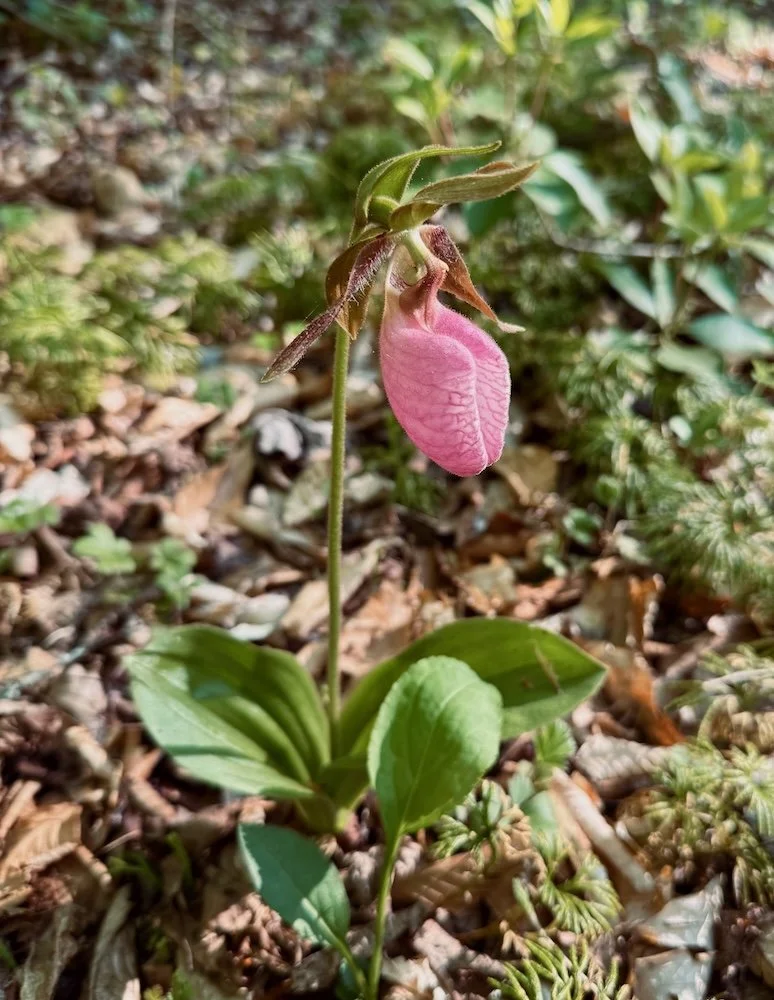
Dream of what is possible.
Immerse in the practice.
Reflect with honesty.
Transform through tending.
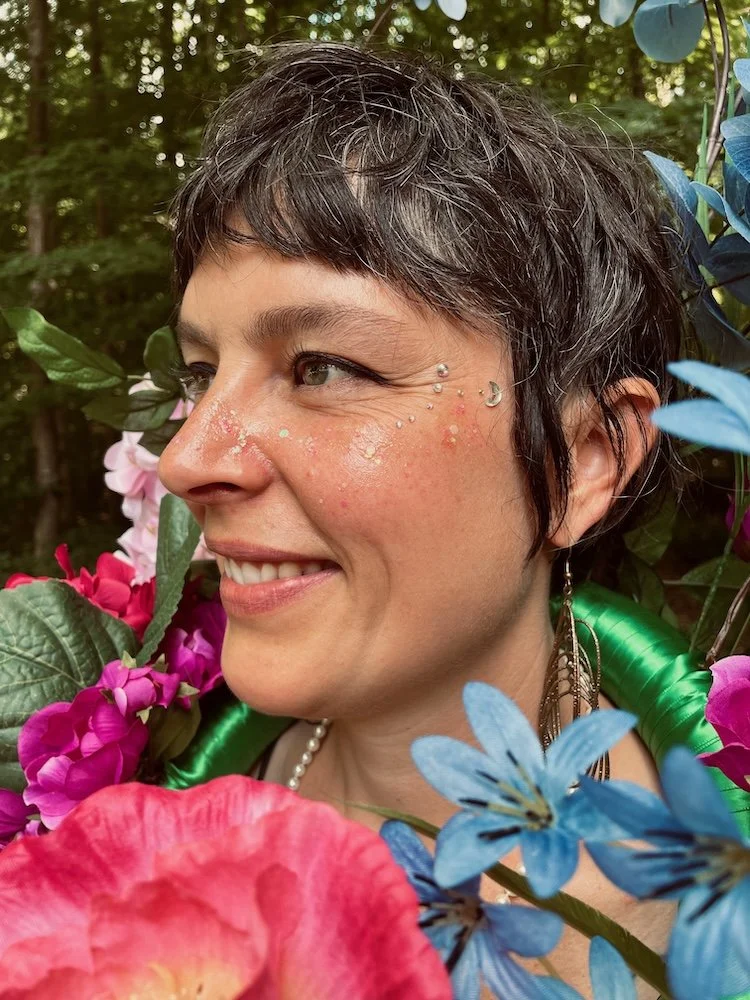
Molly Morningglory
I offer individual and group coaching for people facing burnout — built around time in nature, embodied practice, and the genuinely enjoyable work of figuring out what restores you specifically.
Sessions may include time outdoors, reflective practice drawn from ceramic art and craft, somatic awareness, and personalized tools that fit the real texture of your life. Nothing here is one-size-fits-all. Most of the best discoveries happen sideways, while you're paying attention to something else entirely.
You don't need experience with clay, nature, or coaching. You need only the honest recognition that something has to change — and enough remaining curiosity to wonder what that might look like.
Slow down. Get outside. Put your hands in the earth.
Notice what is still alive in you — and get curious about it.
I’m here to help you navigate the journey.
My philosophy is rooted in a lifetime of experience in the woods of Appalachia.
And articulated in the teachings of adrienne maree brown (Pleasure Activism, Emergent Strategy), Audre Lorde (Uses of the Erotic), Robin Wall Kimmerer (Braiding Sweetgrass), Starhawk (The Fifth Sacred Thing), and Emily Nagoski (Burnout: The Secret to Unlocking the Stress Cycle). Deep thanks to these brilliant teachers.
* Special thanks to the teachers in my life, the family members, friends, and ancestors who reared me in a way of tender attunement to nature. They gave me examples of joy, curiosity, confidence, and authenticity.
-
My practice is rooted in 35 years of ceramic art (MFA), 20 years of teaching (in community art centers and higher education), and a lifetime of knowing that something happens to a person when they slow down, get outside, and put their hands in the earth.
-
Soft dirt is turned earth — worked, tended, opened. It gives way. It gives back.
Thirty-five years of hands in clay will teach you: the earth has opinions. Push too hard and it collapses. Rush it and it tears. But slow down, get curious, and something shifts — you stop trying to impose a shape and start having a conversation.
That conversation is what Soft Dirt is about. A nature-based coaching practice born in the mountains of western North Carolina, designed for people who have given so much for so long that they have forgotten they were ever curious about themselves to begin with.
-
Burnout is not a personal failure. It is a biological event with cultural accomplices.
Emily Nagoski's research makes this plain: stress is a physical cycle built to complete — to move through activation and discharge and, finally, rest. Modern life is extraordinary at generating stressors and terrible at letting the cycle finish. We handle the crisis, answer the email, show up again — but never signal to our nervous system that the threat is over. The stress accumulates in the body until something gives.
adrienne maree brown names the systemic layer: this is not an accident. We live inside systems designed to extract, that mistake depletion for dedication and busyness for meaning.
Burnout, though, often arrives with a question underneath it: Is this really all there is? That question is a doorway. Soft Dirt is interested in what's on the other side.
-
Here is Nagoski's most counterintuitive finding: eliminating the stressor does not complete the stress cycle. You can solve the problem and still be wrecked. The body needs its own signal that it is safe — and that signal must be physical. Movement. Breath. Rest. Connection. Making something with your hands. The body does not take your word for it. It needs to feel it.
This is why nature-based, embodied work is not a pleasant addition to this coaching practice. It is the mechanism. A walk in the woods is not a reward for doing the real work — it is the real work. Robin Wall Kimmerer teaches that the land is in constant, generous communication with those present enough to receive it. When we go outside and slow down, we are not escaping restoration. We are stepping directly into it.
-
Kimmerer writes that the natural world holds languages and intelligences older than our own. The mountains of western North Carolina are not a backdrop here. They are a collaborator — very old, very patient, very mossy.
Kimmerer also teaches reciprocity: asking not only what a place can give, but what you give back. This is a surprisingly useful question to turn on yourself. Not what more can I produce? but what do I actually need, and what happens when I tend that? Restoration is its own kind of curious inquiry.
-
Audre Lorde named the erotic as a deep current of aliveness — the felt sense of being fully present and engaged. The pot finally centered. The trillium that came up overnight. The comforting melt of ice cream in your mouth. We have been trained to distrust this current, to treat it as indulgence rather than information. But the erotic is knowledge. It knows things spreadsheets do not.
Nagoski's science agrees: positive emotions are one of the primary ways the body completes the stress cycle. Joy, delight, the satisfaction of making — these are not distractions from healing. They are how healing happens.
adrienne maree brown puts it plainly: pleasure is not the reward after hard work. It is a compass during it. A path back from burnout made entirely of discipline and obligation is just more burnout with better branding.
The tools we build together at Soft Dirt need to carry genuine delight, or they won't hold when life gets busy again. The goal is not just to cope. It is transforming your life to one you are excited to show up for.
-
No two people burn out the same way. No two people restore the same way either. Nagoski is clear: what completes the stress cycle varies by person. There is no universal protocol — only honest, curious attention to what is actually happening in this body, this life.
A good teacher, like a good potter, learns to read the material. Clay tells you what it needs, once you stop talking over it. So do people, given enough quiet and the right questions. This is what adrienne maree brown calls emergent strategy: the right shape arises from observing patterns in nature and patterns in yourself.
Soft Dirt arrives with deep experience and genuine curiosity — not a fixed program. Every person brings their own kind of ground, their own particular way back. Finding that way is the interesting part.
-
Starhawk's vision is a world where what is sacred and irreducible — clean water, safe food, rest, community, the freedom to love and move — is birthright, not transaction. Nagoski might call these the conditions under which the stress cycle can actually complete. Starhawk calls them sacred. Both are right.
Every person who reclaims their rest is doing something that matters beyond themselves. Every moment of genuine presence in a body that had learned to be absent is a homecoming. The fifth sacred thing doesn't arrive all at once. It is practiced into existence, one person at a time, one hand in the dirt at a time.